
Understanding Psoriasis
What is Psoriasis?
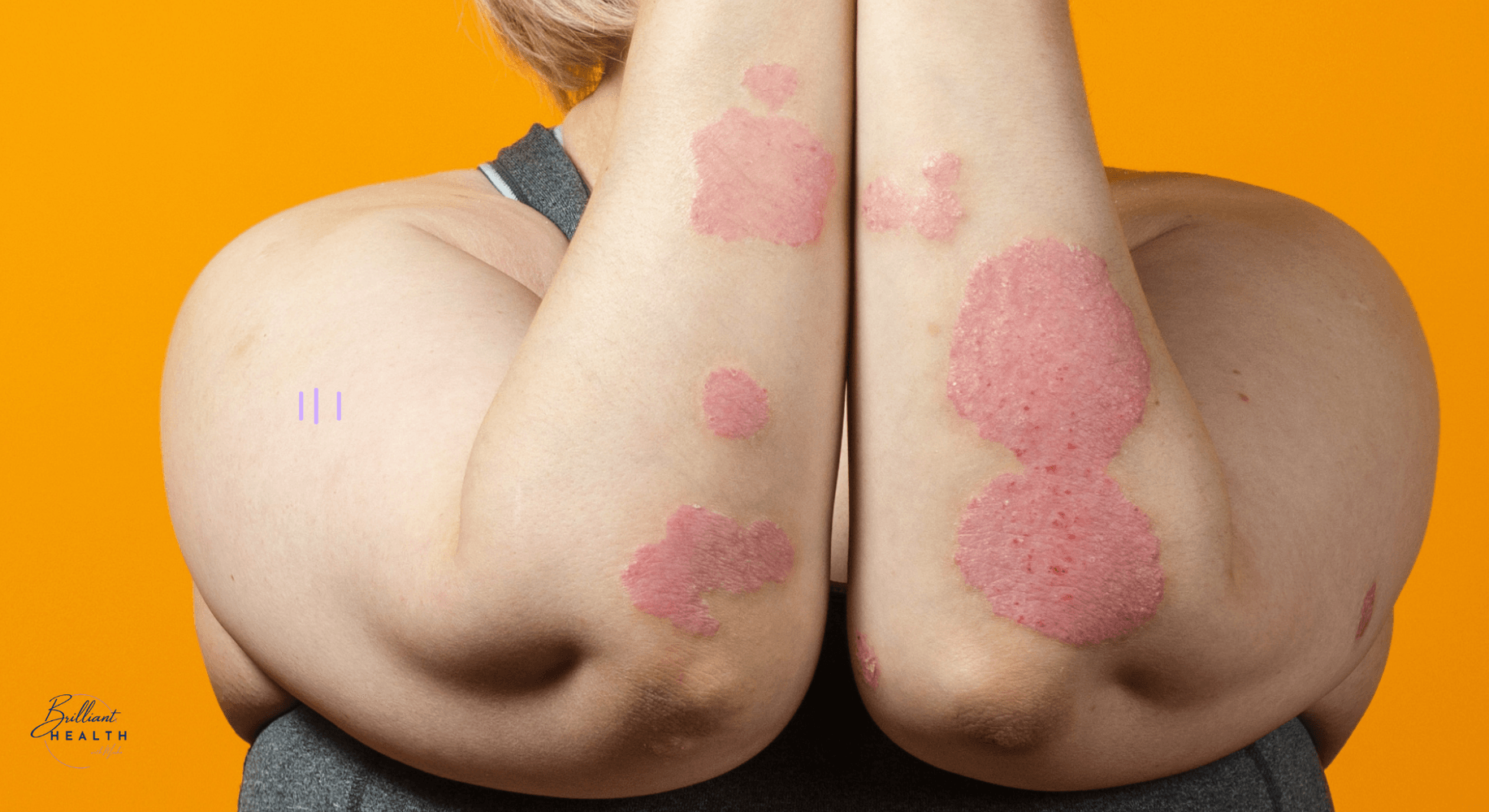
Psoriasis is a chronic, inflammatory autoimmune skin disease characterized by several key features:
Rapid Overproduction of Skin Cells: Psoriasis triggers an accelerated skin cell turnover rate. This leads to the formation of red, scaly patches or plaques on the skin.
Inflamed and Painful Plaques: These plaques are areas of inflamed, thickened, and scaling skin. They are often itchy and painful, commonly appearing on the scalp, elbows, knees, and lower back.
Immune System Dysregulation: Psoriasis is caused by an immune system malfunction, leading to excessive skin cell proliferation and inflammation. This autoimmune response results in the characteristic skin changes of the disease.
Chronic Nature with Flare-Ups: Psoriasis is a lifelong condition characterized by cycles of flare-ups and remissions. Flare-ups can be triggered by various factors such as stress, injury, infection, or certain medications.
Types of Psoriasis: The most common type is plaque psoriasis (psoriasis vulgaris), affecting about 90% of patients. Other types include guttate (small drop-like lesions), inverse (in skin folds), pustular (pus-filled lesions), and erythrodermic (widespread redness).
Genetic Component: Psoriasis is not contagious but has a strong genetic component, often running in families.
Management and Treatment: While there is no cure, psoriasis can be managed with various treatments. These include topical creams and ointments, phototherapy, oral medications, and injectable biologics aimed at reducing inflammation and skin cell turnover.
Links to Insulin Resistance
Several studies suggest the following connections between insulin resistance and psoriasis:
Increases the risk of developing Psoriasis: Insulin resistance can precede and increase the risk of developing psoriasis. A large longitudinal study found that higher baseline insulin resistance was associated with an increased risk of later developing psoriasis.[1]
Higher Insulin Levels: Psoriasis patients, even those without diabetes, exhibit higher levels of insulin resistance compared to healthy controls. This suggests psoriasis may represent a pre-diabetic condition.[2][4]
Severity: The severity of psoriasis correlates with the degree of insulin resistance. Patients with more severe psoriasis tend to have higher insulin resistance levels.[5]
It's Bidirectional: Reducing psoriasis severity through treatment can decrease insulin resistance levels, indicating a bidirectional relationship between the two conditions.[2]
Infllammation:Inflammatory cytokines like TNF-α, which are elevated in psoriasis, can induce insulin resistance by impairing insulin receptor signaling.[4]
Fat Tissue: Adipocytokines secreted by adipose tissue, which are dysregulated in psoriasis, can contribute to insulin resistance.[2][4]
Living with Psoriasis
Moisturizing Regularly: Keeping the skin well-moisturized helps reduce dryness and scaling.
Avoiding Triggers: Identifying and avoiding personal triggers such as stress, certain foods, or weather changes can help reduce flare-ups.
Following Treatment Plans: Adhering to prescribed treatments and attending regular check-ups with a dermatologist are crucial for effective management.
Healthy Lifestyle Choices: Maintaining a healthy diet, exercising regularly, and avoiding smoking and excessive alcohol consumption can improve overall health and potentially reduce the severity of psoriasis symptoms.
Addressing Insulin Resistance: Understanding the link to Insulin Resistance and addressing it may help manage flares and keep it at bay
Although Pasoriasis follows a relapsing and remitting course, understanding and managing psoriasis can significantly improve the quality of life for those affected. Remember, while there is no cure, understanding this link and addressing Insulin Resistance can give relief.
In summary, the chronic inflammatory state and dysregulated adipokine/cytokine profile in psoriasis appears to promote insulin resistance, which in turn increases the risk and severity of psoriasis, creating a self-reinforcing cycle linking the two conditions.[1][2][4][5]
Citations
[1] https://link.springer.com/article/10.1007/s00403-021-02298-9 [2] https://www.ncbi.nlm.nih.gov/pmc/articles/PMC8021695/ [3] https://diatribe.org/understanding-diabetes/psoriasis-and-diabetes-whats-connection [4] https://www.frontiersin.org/articles/10.3389/fmed.2021.605691/full [5] https://www.ncbi.nlm.nih.gov/pmc/articles/PMC6069377/
Ready for the benefits?
The system including the tea Unimate and the premeal drink Balance, that is changing the landscape of Insulin resistance and related disorders across the globe!

Misha Fayant - Why Me?
I am committed to providing reliable and actionable insights on insulin resistance. With a passion for promoting wellness, I strive to make complex health concepts accessible and relevant to your daily life, helping you achieve a healthier future.
Connect with me.
Enhance your wellness path with guidance. Tailored coaching through the Feel Great System or AO Scan services.Fill out our form, for assistance and kickstart your journey to combat insulin resistance starting today!
Related posts
Exploring the ways in which virtual reality and artificial intelligence are shaping the future of game design, and how developers can take advantage of these technologies to create more immersive and interactive experiences.
Lorem ipsum dolor sit amet, consectetur adipisicing elit. Autem dolore, alias, numquam enim ab voluptate id quam harum ducimus cupiditate similique quisquam et deserunt, recusandae.
Lorem ipsum dolor sit amet, consectetur adipisicing elit. Autem dolore, alias, numquam enim ab voluptate id quam harum ducimus cupiditate similique quisquam et deserunt, recusandae.


Connect with me
Got questions I would love to help, just reach out!
The information provided on this blog regarding insulin resistance, diabetes, and related health conditions is based on my own personal journey and research into addressing insulin resistance for better health. However, I am not a doctor or healthcare professional, and the content on this blog does not constitute medical advice, diagnosis, or treatment recommendations.
I am simply sharing the knowledge and insights I have gained through my own experiences and studies. This information should not be used as a substitute for professional medical advice, diagnosis, or treatment from a qualified healthcare provider. You should always consult your physician or other qualified healthcare professional before starting any new treatment, diet, exercise program, or making any changes to an existing treatment plan.
Individual health situations and needs vary, and the information provided on this blog may not be suitable or accurate for your specific circumstances. I make no representations or warranties of any kind about the completeness, accuracy, or reliability regarding the information provided on this blog for any purpose. Any reliance you place on such information is strictly at your own risk.
Created with ©systeme.io
Privacy policy | Terms of use | Cookies